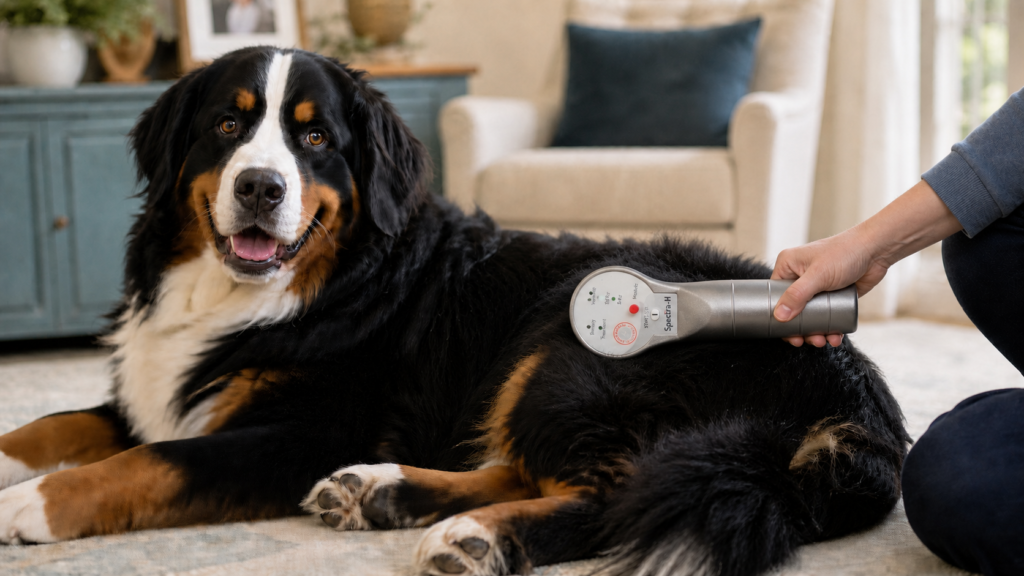
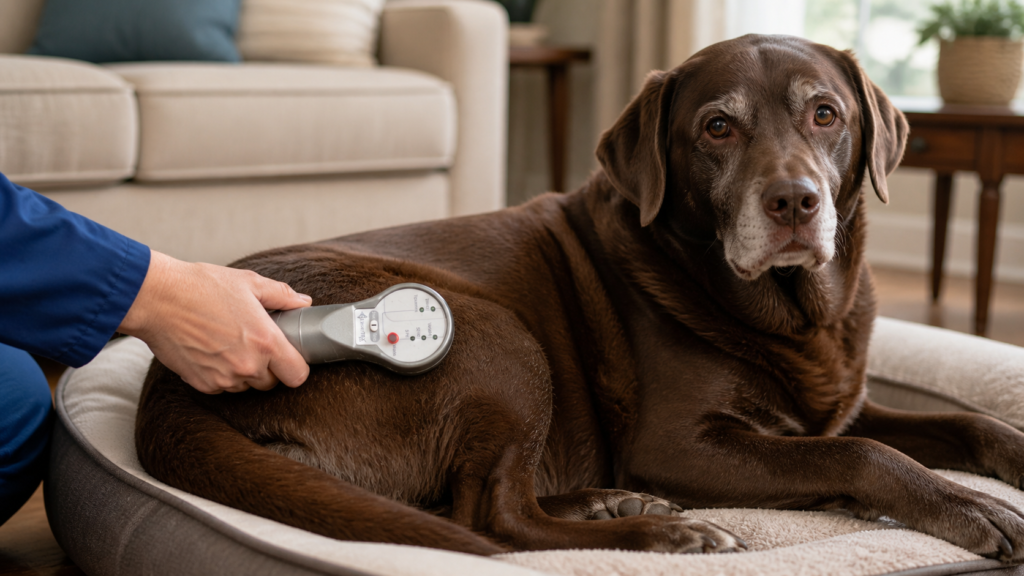
Laser therapy for dogs with arthritis can reduce pain, calm irritated tissue, and help many dogs move more comfortably. It will not erase arthritis overnight, but when we treat the correct area with an appropriate device, laser therapy can make a truly meaningful difference in daily comfort and mobility.
I have worked with cold laser therapy for more than 14 years, both in veterinary clinics and home-care settings. Although arthritis can have many causes and contributing physiological factors, laser therapy targets pathways common to the condition. It reduces inflammation in and around the joint, provides rapid pain relief without toxic side effects, improves the health of injured tissues, and stimulates cellular repair.
Many pet parents come to me after their dog is already receiving conventional arthritis treatment and ask, “Is there anything else we can do?” Very often, my answer is laser therapy. I have seen dogs feel better, heal faster and return to doing the things they love.
In this detailed guide, I’ll explain how low-level laser therapy works to relieve arthritis pain and improve mobility in dogs. I’ll also share how I use it with my patients and review recent research demonstrating its effectiveness.
Does Laser Therapy for Dogs With Arthritis Really Help?
Yes. Laser therapy is one of the most valuable tools I use to help dogs with arthritis feel better and move more comfortably. Canine studies have documented meaningful improvements in physical activity, pain, lameness, joint movement, and everyday function. In some studies, dogs improved enough to use less pain medication under veterinary supervision.
The evidence gives pet parents good reason to feel confident about laser therapy. The best results come from treating the correct joint and surrounding tissues with an appropriate device, effective settings, and a consistent schedule tailored to the dog’s needs.
What the Canine Arthritis Studies Found
| Study | Dogs and treatment | Main findings |
| Barale mobility study | 23 dogs with naturally occurring hip or stifle osteoarthritis received six weekly treatments | Step counts increased during the first week. Broader daily activity increased by week two and remained above baseline through week six. |
| Looney elbow study | 20 dogs with elbow osteoarthritis were randomly assigned to active PBM or placebo treatment for six weeks | The treated group had greater improvements in lameness and most pain measures. Nine of 11 treated dogs reduced NSAID use compared with none in the sham group. |
| Alves hip study | 20 dogs with bilateral hip osteoarthritis received PBM over three weeks or a 21-day meloxicam course | PBM produced better results for several pain and function measures during the first 30 days. Joint range of motion improved from day 15 through day 90. |
Across different devices, treatment schedules, and measurement methods, the studies point in the same direction: photobiomodulation is an effective option for managing canine osteoarthritis. This consistency is exactly why I feel confident recommending laser therapy as part of an arthritis-care plan.
A Closer Look at the Barale Mobility Study
The Barale study is especially useful because the researchers did more than ask pet parents whether their dogs seemed better.
Twenty-three client-owned dogs had confirmed hip or stifle osteoarthritis. Each dog wore a collar-mounted activity monitor before and throughout the study. The monitor recorded steps, activity, and time spent at different movement levels.
The dogs received one low-level laser treatment each week for six weeks. The dogs’ daily step count increased during the first week. The average rose from 1,109 steps during the short baseline period to 4,472 during week one.
By week six, the average was 8,416 steps. Total daily activity increased during the second week and remained higher through the end of the study.
The result is practical and meaningful for families living with canine arthritis: the dogs became more willing and able to move. That is the kind of improvement pet parents can see in everyday life.
Treatment was well tolerated, with no treatment-related itching, redness, swelling, coat changes, or discomfort observed. Half of the dogs also reduced their pain medication within the study’s clinical plan; another encouraging sign that their comfort improved.
I find this study especially valuable because it measured movement in the dogs’ normal lives, where improved comfort and mobility matter most. This mirrors exactly what I saw when I went into a client’s home to recheck my patients’ progress during and after laser therapy.
What the Controlled Studies Add
The Looney study included 20 dogs with naturally occurring elbow osteoarthritis. The dogs were randomly assigned to active photobiomodulation or placebo treatment. After six weeks, the treated dogs showed greater improvements in lameness and most of the pain-related measures. Eighty-two percent (82%) of the treated dogs were able to reduce their NSAID dose within the study plan. None of the nine placebo-treated dogs reduced theirs. (PubMed)
A separate controlled study by Alves and colleagues evaluated 20 dogs with moderate to severe hip osteoarthritis. One group received photobiomodulation over three weeks, while the comparison group received meloxicam for 21 days. The laser-treated dogs had better results in several pain, function, stiffness, gait, and quality-of-life measurements during the first month. Their hip range of motion also improved from day 15 through day 90. (AVMA Journals)
These controlled studies reinforce what I have repeatedly observed in practice: correctly applied laser therapy can make a meaningful difference in how an arthritic dog feels and moves. For pet parents, that can mean easier rising, more comfortable walks, better rest, and a dog who is more willing to participate in family life.
How Does Laser Therapy Support an Arthritic Joint?
Photobiomodulation is the medical term for using light to change biological activity inside tissue.
Specific visible red and invisible-infrared wavelengths are absorbed by light-sensitive structures within cells. Controlled research studies have shown improvements in mitochondrial activity, cellular energy production, nitric oxide, oxidative stress, and inflammatory signaling. In simpler terms, we are giving stressed tissue a signal and direct energy that can help it manage inflammation, circulation, pain, and repair more effectively.
The response is dose-dependent, which means the right amount of light matters. I choose a laser and treatment plan based on the dose that will create the best biological response in the target tissue. Effective laser therapy is about delivering the appropriate wavelength and energy. (PubMed)
Arthritis Involves More Than Worn Cartilage
Many pet parents picture arthritis as two bare bones rubbing together after the cartilage disappears. In reality, an arthritic joint is a complex environment involving cartilage, bone, the joint capsule, surrounding soft tissues, nerves, and muscles. This gives us several important treatment targets for relieving pain and improving movement.
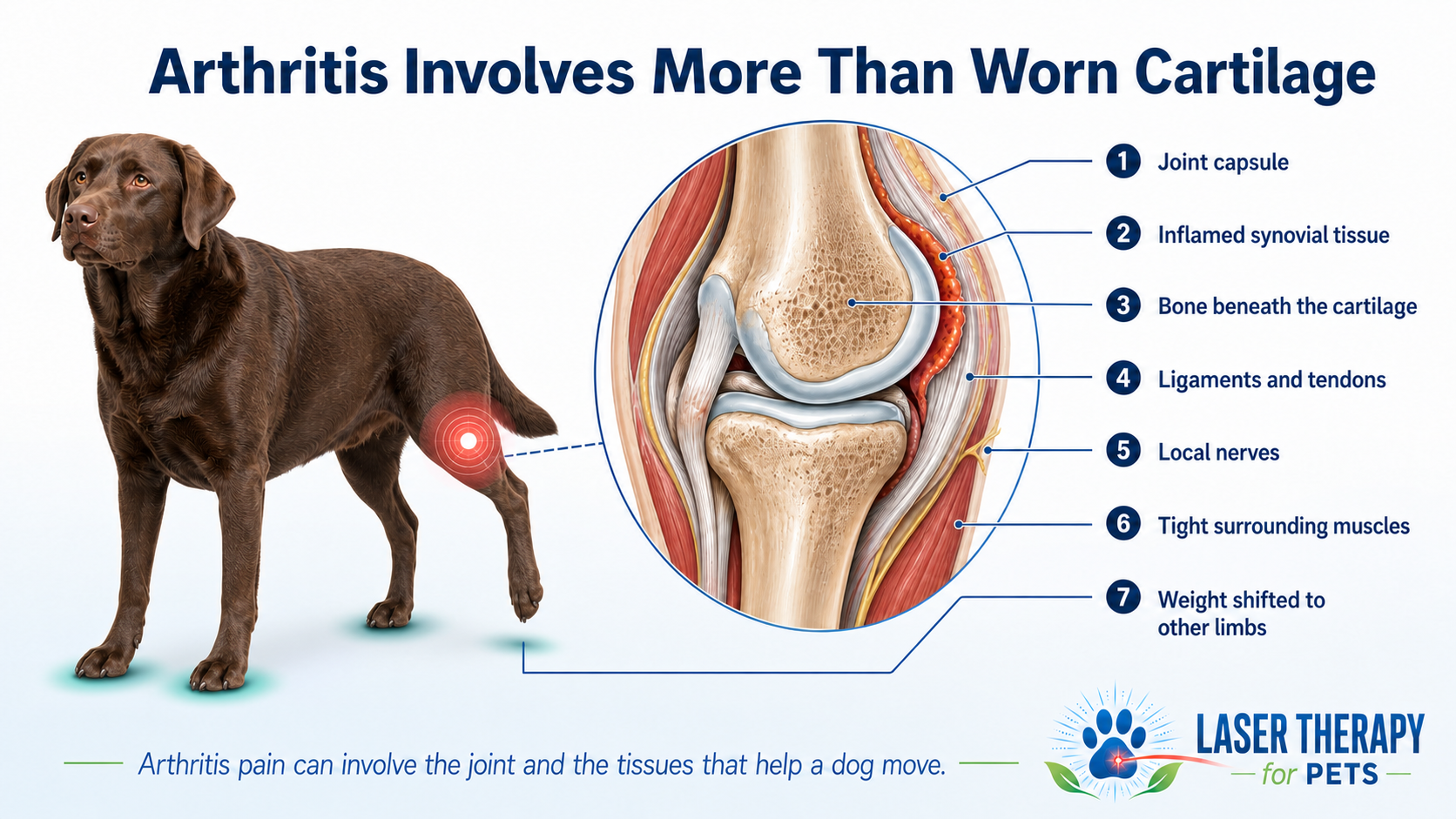
That is why I treat the full pain pattern rather than focusing only on the exact center of the painful joint.
A dog with hip arthritis may also have tension through the thigh muscles, lower back, or opposite rear leg. An arthritic elbow can change how the dog uses the shoulder, neck, and other front limb. Including the tissues that are contributing to the pain pattern gives laser therapy a better opportunity to improve comfort and movement.
I identify the surrounding tissues that are actually contributing to the dog’s discomfort and include the most important areas in the treatment plan. This focused approach makes each session purposeful and efficient.
Laser Therapy Can Calm More Than One Part of the Pain Cycle
When a joint hurts, a dog changes how they stand and move. Muscles tighten to protect the sore area. Other limbs carry more weight. Movement becomes less balanced, and the nervous system keeps receiving pain messages.
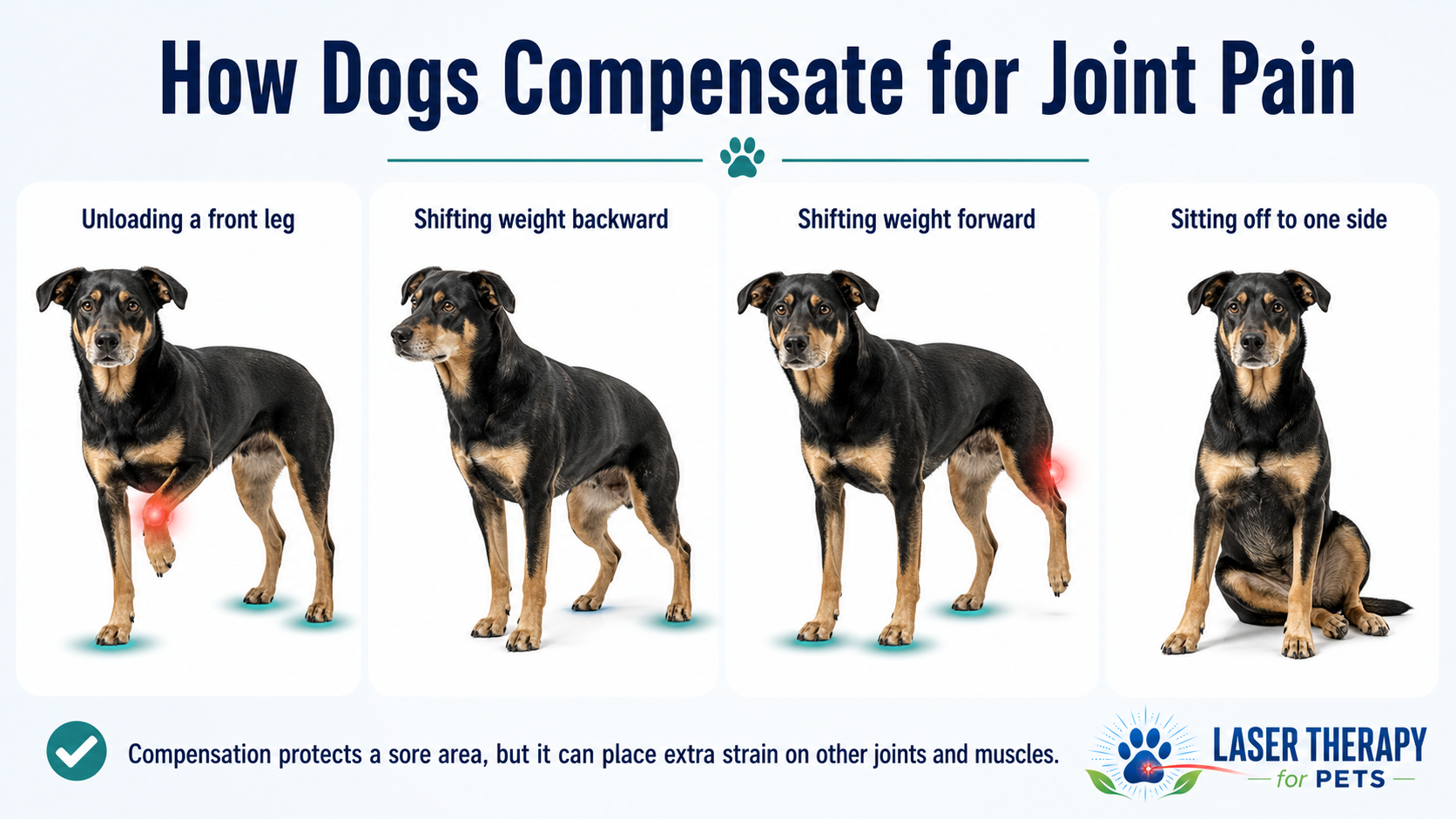
With chronic pain, the nervous system can become increasingly sensitive. A movement or touch that once caused mild discomfort may begin to feel much worse. This process is sometimes called central sensitization or wind-up pain.
Low-level laser therapy can help at several points in this cycle. It calms inflammatory activity, influences pain signaling, improves the environment around stressed cells, and helps release secondary muscle tension around the joint. Research supports these anti-inflammatory and pain-relieving effects across several cellular pathways. (PubMed)
The goal is comfort and natural pain relief. Laser therapy supports the tissues involved in movement while reducing the pain that makes a dog hesitant to stand, walk, climb, or play.
What Improvements Should You Watch for in an Arthritic Dog?
The most useful laser therapy results are usually visible in ordinary activities.
You may first notice that your dog seems more relaxed. They may stretch out instead of staying curled tightly. They may stop repositioning every few minutes at night. They may allow you to touch the sore hip, knee, elbow, or lower back without immediately turning, tensing, or moving away.
Those early signs tell us the dog is becoming more comfortable. Next, I look for improvements in everyday movements that show the treatment is helping your dog feel better and enjoy a better quality of life.
Practical Signs of Better Mobility
Watch for changes such as:
- Rising from the floor with less effort
- Smoother first steps after a nap
- Less hesitation before walking
- A more even pace
- Less lagging behind during a walk
- Greater willingness to go outside
- Easier use of a ramp
- Less slipping or scrambling
- More comfortable squatting or posturing
- Fewer nighttime awakenings
- Less licking over the painful area
- Fewer severe flare-up days
Meaningful improvement often begins with small victories. For an older dog, standing up smoothly after resting can be a major gain and a clear sign that treatment is working.
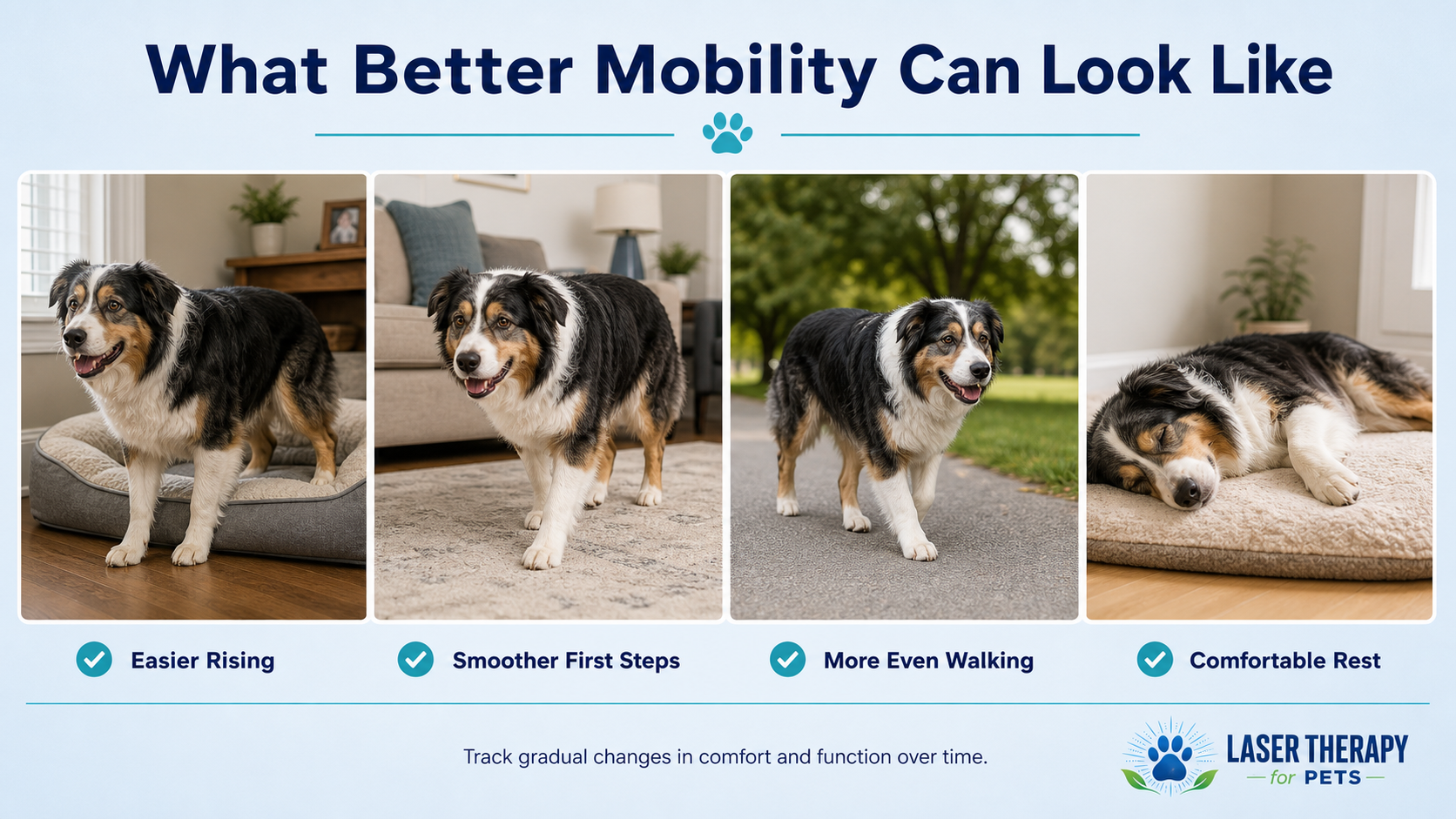
The 2022 AAHA Pain Management Guidelines emphasize watching posture, gait, behavior, demeanor, and the dog’s ability to complete normal daily activities. They also support using owner observations and home videos to monitor chronic pain over time. (AAHA)
Keep a Laser Therapy Treatment Log for Your Dog’s Arthritis
A simple laser therapy treatment log helps you connect each treatment session with changes in your dog’s arthritis symptoms. By recording when and where you use the laser, and how your dog moves, rests, and behaves afterward, you can see whether treatments are leading to consistent improvements in pain, stiffness, and mobility.
Record:
- Date of each laser treatment
- Area treated
- Laser treatment time
- Pain or stiffness before treatment
- Mobility later that day
- Mobility the next morning
- Sleep quality
- Medications used
- Unusual activity
- Slips, falls, or possible flare triggers
Choose three to five everyday activities that matter for your dog, such as rising, taking the first few steps, walking, using stairs, and sleeping comfortably. Score them consistently from 0 to 5 so you can compare changes in your dog’s comfort and mobility with the laser treatment sessions you recorded.
Use the same scoring system each week. Consistency turns your observations into useful information you and your veterinarian can act on.
How Often Should a Dog With Arthritis Receive Laser Therapy?
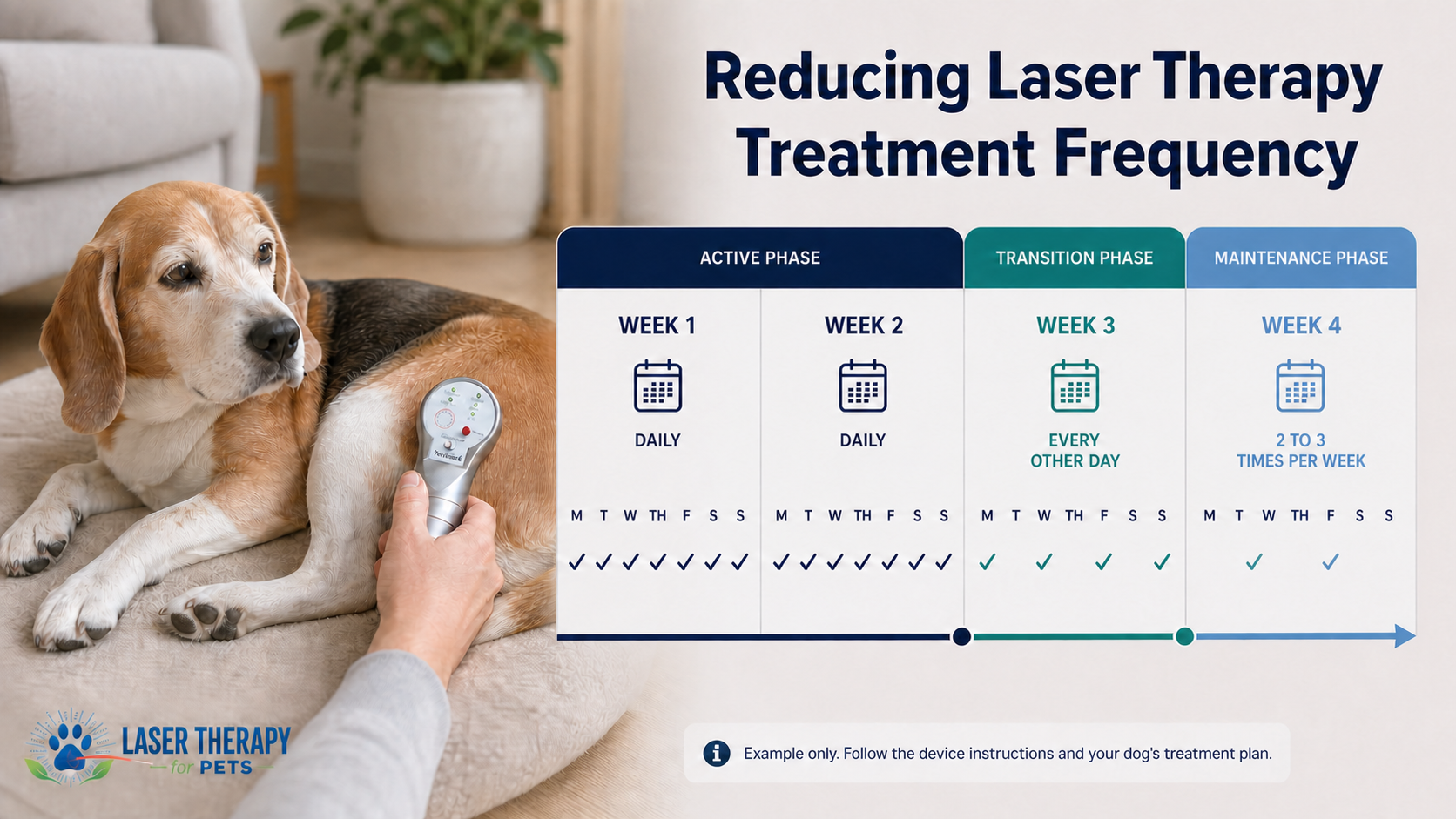
For many dogs with mild to moderate arthritis, I recommend one treatment per day during an active painful or stiff phase when the home device is designed for that schedule.
The final frequency depends on:
- The joint being treated
- How advanced the arthritis is
- Whether the dog is having an active flare
- The surrounding tissues involved
- The laser device and its instructions
- Treatment time
- The dog’s response
The most effective schedule is matched to the device, treatment area, and individual dog.
Why I Often Begin With Daily Home Treatment
I have used laser therapy on many schedules during my career. I have given single sessions for pain relief. I have also scheduled arthritis treatments twice a week in a clinic.
I saw a significant improvement in my results when I began renting laser devices to pet parents and teaching them to treat their dogs once a day at home.
That daily consistency made a noticeable difference. Dogs often improved faster, and pet parents could tell me exactly what had changed between follow-ups. Daily home treatment helped us stay ahead of pain and inflammation and build on the dog’s progress from one session to the next.
Daily sessions also give you a chance to examine the area every day. While positioning your dog, gently feel for:
- Heat
- Swelling
- Muscle tightness
- Soreness
- Guarding
- Sensitivity to touch
- Changes in how the joint moves
You may notice that the muscles feel softer or the dog is less protective of the area. You may also catch a new problem before it becomes severe.
Treating an Active Arthritis Flare
During a flare, the dog may be stiffer, slower, more restless, or more sensitive than usual. They may have overdone a walk, slipped on the floor, played too hard on a good day, or become sore after cold or damp weather.
When the device and treatment plan are appropriate, daily treatment can help us stay ahead of that pain rather than waiting until it becomes severe.
Daily home treatment gives you the flexibility to schedule laser sessions when your dog needs them most. You might treat in the morning to ease stiffness after sleeping or near bedtime to reduce pain-related pacing and restlessness.
The session does not have to happen at the exact same minute each day.
When to Reduce Treatment Frequency
Because arthritis is chronic, many dogs benefit from ongoing support. Once improvement is stable, I reduce treatment to the lowest frequency that maintains comfortable movement and protects the progress we have made.
If your dog loses progress after treatment frequency is reduced, use that response as useful guidance. The joint may still be in an active pain phase, an additional treatment area may need attention, or the broader arthritis plan may need adjustment.
At-Home Cold Laser Therapy vs. In-Clinic Class IV Treatment
At-home Class I low-level laser therapy and in-clinic Class IV treatment share the same therapeutic goal: creating photobiomodulation in the target tissue to reduce pain, calm inflammation, and support repair. The class describes the laser’s potential hazard, not the quality of the therapeutic response.
The main difference is how the light energy is delivered.
A Class I at-home laser delivers therapeutic light at a lower power over a longer session. This makes frequent treatment practical for pet parents. Class IV equipment delivers much higher power in a shorter period and requires trained handling, protective controls, and careful management of heat and exposure. Laser devices are classified according to the level of potential hazard to the user. Class I is the lowest hazard classification and is considered non-hazardous during normal operation. This allows a properly designed Class I therapeutic laser to be used safely and consistently at home. Class IV is the highest hazard classification. It indicates that the device requires substantial safety controls, not that it automatically produces better therapeutic results. The most effective laser is the one that delivers an appropriate dose to the target tissue safely and consistently.
For most arthritic dogs who are good candidates for home care, I prefer safe at-home low-level laser therapy. It provides the consistency chronic joint pain needs while allowing the dog to receive treatment in a comfortable, familiar environment.
Laser Classifications
Laser devices are classified by the risk of injury to the users. Class IV is a laser safety classification, not a measure of superior clinical results. The most effective laser is the one that delivers an appropriate dose to the target tissue safely and consistently.
A Class IV laser can expose the eyes and skin to an immediate hazard from the direct or reflected beam. Because of that power, strict controls and appropriate protective eyewear are required. Technique matters because angle, movement, treatment time, and settings affect how much energy and heat reach the tissue. A Class I at-home laser provides a very different treatment experience, with a safer slower delivery of therapeutic light that supports consistent home care. A high-quality Class I home cold laser delivers therapeutic light without becoming hot, burning, or hurting. Its lower power allows the light to be delivered safely over a longer session, making consistent treatment practical. This is especially valuable for arthritis because daily or frequent sessions can help pet parents stay ahead of recurring pain and inflammation. (FDA)
Why At-Home Treatment Is Easier on an Arthritic Dog
A Class IV laser may deliver treatment in only a few minutes, but the laser session is just one small part of the clinic visit. For an older dog with arthritis, traveling to the clinic, walking on unfamiliar surfaces, waiting, and being positioned for treatment can require considerable physical effort.
An arthritic dog may need to:
- Walk across a slippery floor
- Be lifted into a vehicle
- Brace during the drive
- Get out of the vehicle
- Wait in a clinic
- Stand or lie in an unfamiliar position
- Travel home again
That can be a lot for an older dog with painful hips, knees, elbows, or a sore back.
At home, your dog can lie on a favorite bed, couch, blanket, or padded floor. Treatment may feel more like quiet petting from someone they trust. You can work around the dog’s sleep schedule and treat a flare when it begins instead of waiting for the next appointment.
Home and Clinic Laser Therapy Compared
| Comparison | At-home Class I low-level laser | In-clinic Class IV laser |
| Therapeutic goal | Photobiomodulation | Photobiomodulation |
| Energy delivery | Lower and slower | Higher and faster |
| Laser application time | 5-15 minutes | 1.5-3 minutes |
| Treatment environment | Familiar home setting | Veterinary clinic |
| Repeatability | Often easier to use daily | Limited by appointments and travel |
| Heat concern | Should remain non-heating during correct use | Requires careful heat and technique management |
| Eye precautions | Class I is considered non-hazardous during normal operation; no eye goggles required for most devices | Strict protective controls are required. The technician and pet parent must wear laser protective glasses, and your dog must wear protective goggles during treatment |
| Stress for an arthritic dog | Usually lower | May include travel, handling, and waiting |
How I Build a Holistic Arthritis Plan Around Laser Therapy
Laser therapy can be one of the most valuable home tools in a complete arthritis plan. I combine it with the forms of support that protect the joint, preserve strength, and help your dog stay active.
Confirm That the Pain Is Actually Arthritis
Begin with an accurate diagnosis so you know exactly what is causing the limp and where treatment should be directed.
Similar symptoms can come from:
- A cranial cruciate ligament injury
- A muscle or tendon injury
- Spinal pain
- Nerve compression
- Neurologic weakness
- A fracture or other trauma
- Joint infection
- A bone or soft-tissue growth
A dog with known arthritis can also develop a second problem.
A sudden change from the dog’s usual pattern deserves attention. If your dog normally has mild morning stiffness but suddenly refuses to place a foot on the floor, I do not assume the arthritis simply became worse overnight.
The diagnosis tells us where to treat and what else the dog needs.
Reduce the Mechanical Load on the Joint
Extra body weight places more force on painful joints. It also makes rising, walking, and climbing harder.
Healthy weight management reduces stress on painful joints while preserving the muscle an older dog needs for strength and stability.
Body weight is only one source of stress on an arthritic joint. Your dog’s environment also affects how much force the joint absorbs during everyday movement. Slippery floors, jumping, stairs, and poor traction can repeatedly strain a sore joint, so I also look for simple ways to make the home safer and easier to navigate:
- Place non-slip runners on slick floors.
- Use a stable ramp instead of repeated jumping.
- Provide supportive bedding.
- Keep nails short enough for traction.
- Trim excess hair between the paw pads when needed.
- Block unsafe stairs.
- Avoid repeated jumping into vehicles.
- Use a support harness when the dog needs help rising.
These changes reduce the number of painful slips and awkward movements the joint must absorb each day.
Keep the Dog Moving Without Overdoing It
Regular, appropriately paced movement helps prevent stiffness and muscle loss. I balance that movement with enough rest to avoid overloading a painful joint.
Short leash walks, targeted strengthening exercises, and rehabilitation can help preserve muscle and joint movement while limiting high-impact twisting and pounding.
I would rather see three controlled ten-minute walks than one long walk that leaves the dog unable to rise that evening.
Protect your dog from the “good day” cycle: feeling better, doing far more than usual, and becoming very sore the next day. When laser therapy improves comfort, increase activity gradually so the muscles and joints have time to grow stronger.
Increase exercise slowly and use the dog’s response the next morning as part of your guide.
Preserve Muscle Around the Joint
Strong muscles support a joint and help control movement. When a dog avoids using a painful leg, muscle loss can happen quickly.
I match exercise to the affected joint and the dog’s current ability. For example, an unstable knee needs a different strengthening plan than mild hip stiffness. The right exercises build support without aggravating the painful area.
Laser therapy can be useful before or after rehabilitation, depending on the treatment goal. I may use it to reduce pain before movement or to calm sore tissues afterward.
Combine Pain-Control Tools Thoughtfully
Laser therapy can lower a dog’s pain burden and may allow pain medication to be reduced under veterinary supervision. I use that improvement to build the safest and most effective overall pain-control plan for the individual dog.
A dog with moderate or severe arthritis may need several forms of support, such as:
- Cold laser therapy
- Weight management
- Controlled exercise
- Physical rehabilitation
- Prescription pain control
- Joint-support nutrients
- Environmental changes
- Braces, ramps, or mobility aids
Chronic pain involves several pathways. Veterinary pain guidelines favor a proactive, multimodal plan rather than waiting until pain becomes severe or relying on one tool for every part of the problem. (AAHA)
Base medication adjustments on a consistent pattern of improvement and make them within a monitored veterinary plan. This protects your dog while allowing the treatment plan to evolve as comfort and mobility improve.
I use laser therapy as part of a complete plan that helps the dog stay comfortable enough to move while we protect the joint and preserve strength.
When Not to Use Cold Laser Therapy
In my home-treatment protocols, I avoid or use special caution with the following:
- Direct exposure to the eyes
- Direct treatment over the thyroid gland
- Direct treatment over a known benign or malignant growth
- Previously removed masses or fatty lumps
- Pregnancy or lactation
- Growing puppies
- Areas with unexplained bleeding
Helping an Arthritic Dog Move More Comfortably
Canine research supports laser therapy as a useful option for reducing osteoarthritis pain and improving mobility. The strongest results come from matching the treatment to the dog rather than treating “arthritis” as one identical problem in every patient.
I choose laser therapy based on what will reach the tissues we need to support, can be used safely and consistently, and produces measurable changes in how the dog rises, walks, rests, and participates in family life.
For many dogs, a high-quality at-home low-level laser gives us the best balance of safety, consistency, comfort, and practical daily treatment.
When laser therapy is combined with a healthy body condition, good footing, muscle support, and appropriate pain control, it can become one of the most valuable tools in a long-term arthritis plan.
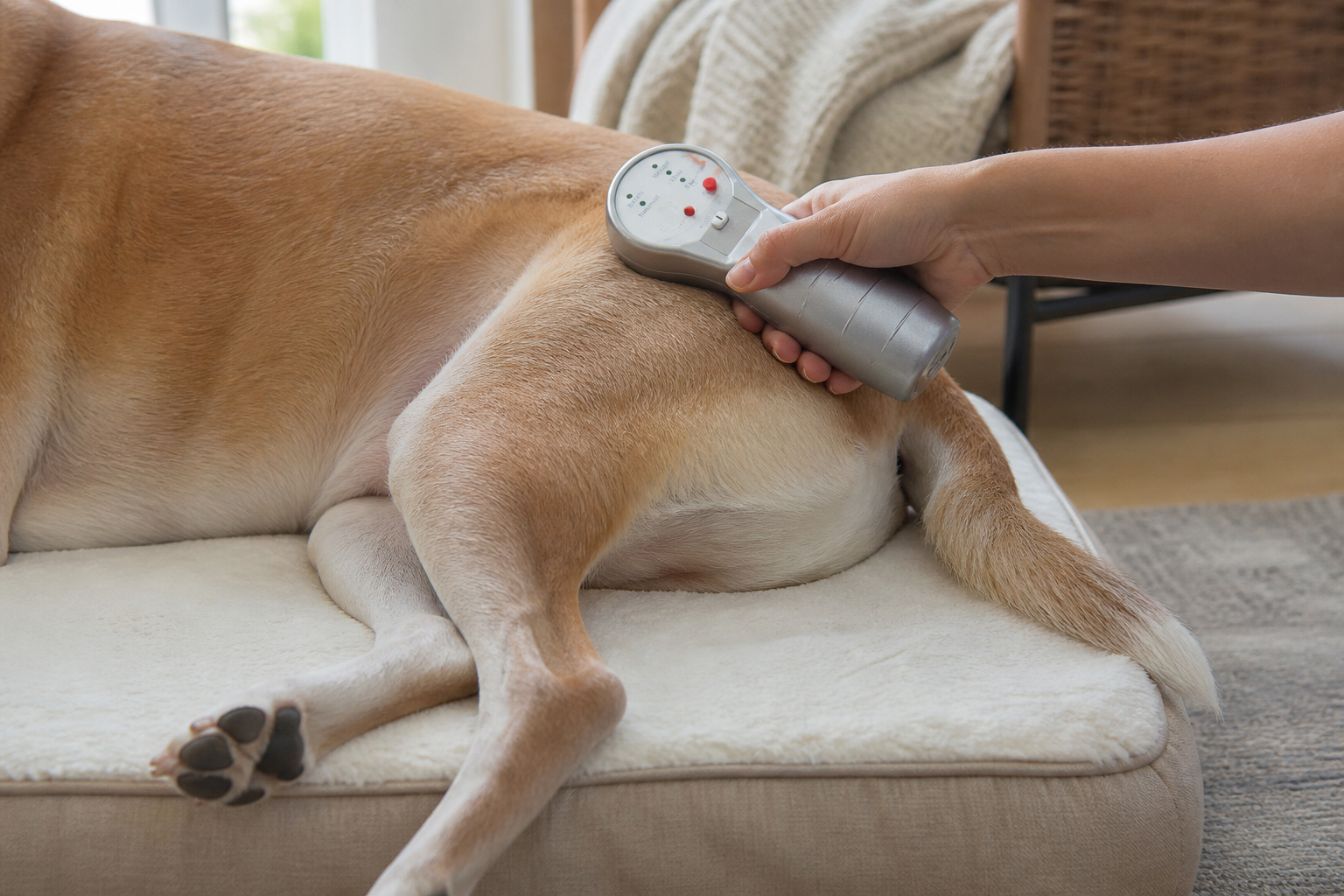
For help choosing a device, locating the correct treatment areas, and creating a schedule for your dog, learn more about my Cold Laser Therapy Consultation for Dogs.
Frequently Asked Questions About Laser Therapy for Dog Arthritis
Yes. Laser therapy improves comfort and mobility in many dogs with osteoarthritis. Canine studies have documented increased activity, reduced pain, improved lameness, and better joint function. The best results come from using an appropriate device and treatment plan for the individual dog. (Cambridge Repository)
I commonly begin with one home session per day during an active mild to moderate arthritis flare when the device is designed for daily treatment. As comfort and mobility improve, treatment may be reduced to every other day or several times per week. The correct schedule depends on the device, joint, disease stage, treatment area, and dog’s response.
Some dogs show better comfort within the first few treatments, while a reliable mobility change may build over days or weeks. In the Barale study, step counts increased during the first treatment week and broader daily activity increased during the second week. Your dog’s timeline will reflect the device, treatment plan, arthritis stage, and consistency of treatment. (Cambridge Repository)
A suitable home cold laser creates the same photobiomodulation response sought with a clinic laser, delivering light at lower power over a longer session. Home treatment can be repeated consistently with less stress, making it especially valuable for chronic arthritis care.
Laser therapy can lower a dog’s pain burden, and some dogs are able to reduce medication under veterinary supervision. Make medication changes after a consistent pattern of improvement and within the dog’s monitored treatment plan. Studies reporting reduced medication use followed this type of structured veterinary approach.
References
- Barale, L., Monticelli, P., & Adami, C. (2023). Effects of low-level laser therapy on impaired mobility in dogs with naturally occurring osteoarthritis. Veterinary Medicine and Science, 9(2), 653-659.
- Looney, A. L., Huntingford, J. L., Blaeser, L. L., & Mann, S. (2018). A randomized blind placebo-controlled trial investigating the effects of photobiomodulation therapy on canine elbow osteoarthritis. Canadian Veterinary Journal, 59(9), 959-966.
- Alves, J. C., Santos, A., Jorge, P., & Carreira, L. M. (2022). A randomized double-blinded controlled trial on the effects of photobiomodulation therapy in dogs with osteoarthritis. American Journal of Veterinary Research, 83(8).
- Hamblin, M. R. (2017). Mechanisms and applications of the anti-inflammatory effects of photobiomodulation. AIMS Biophysics, 4(3), 337-361.
- Gruen, M. E., Lascelles, B. D. X., Colleran, E., et al. (2022). 2022 AAHA Pain Management Guidelines for Dogs and Cats. Journal of the American Animal Hospital Association, 58, 55-76.
- Mosley, C., Edwards, T., Romano, L., et al. (2022). Proposed Canadian Consensus Guidelines on Osteoarthritis Treatment Based on OA-COAST Stages 1-4. Frontiers in Veterinary Science, 9, 830098.
- U.S. Food and Drug Administration. Frequently Asked Questions About Lasers.