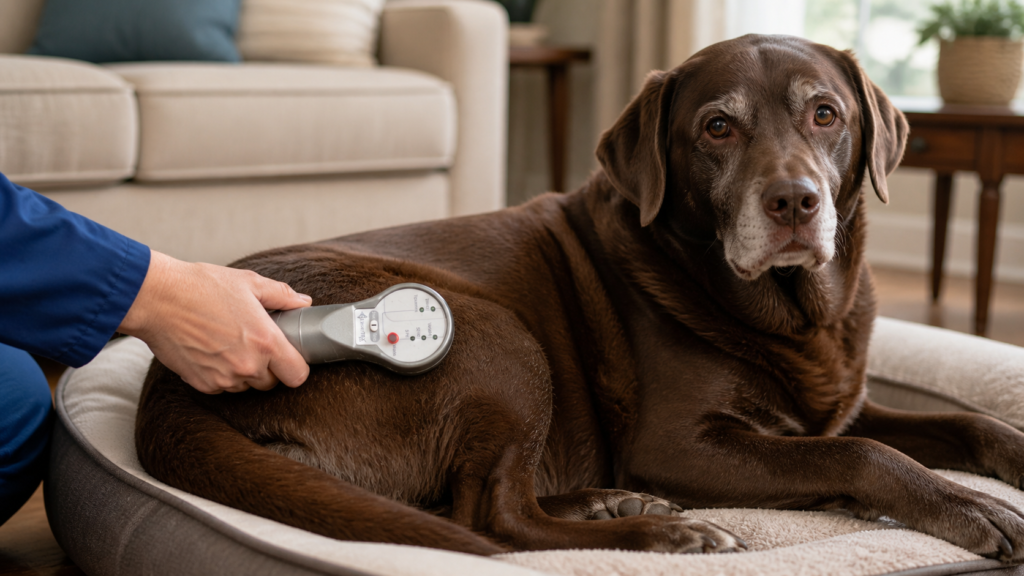
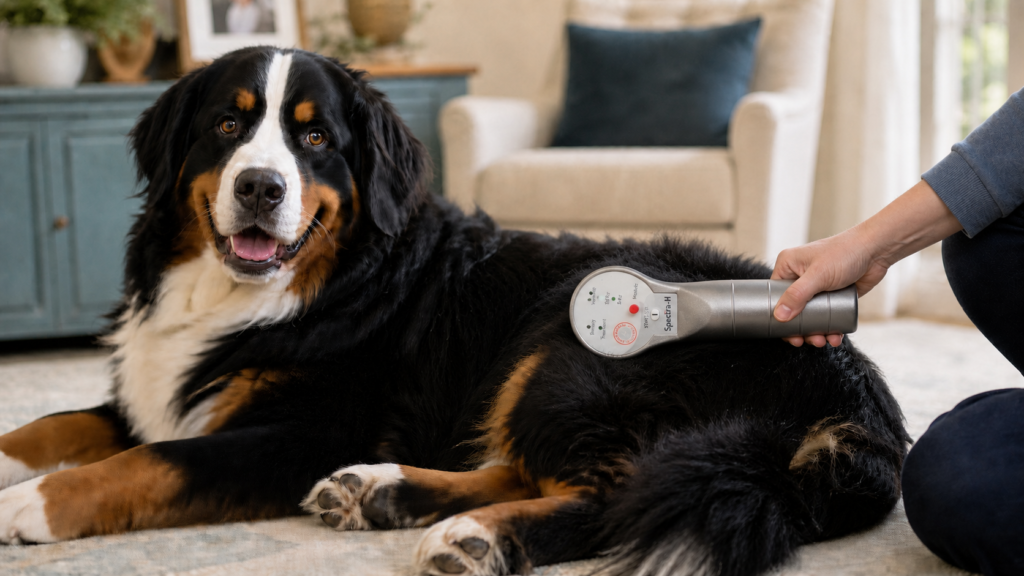
Yes. Laser therapy helps dogs with hip dysplasia by reducing pain and inflammation, improving mobility, and supporting the muscles and tissues around the joint. While laser therapy cannot reshape the bones or correct an abnormal hip socket, it will relieve pain, reduce inflammation, and help your dog move more comfortably.
I have used laser therapy for more than 14 years in veterinary clinics and home settings. In my experience, it is especially useful when hip dysplasia has created an ongoing cycle of pain, swelling, stiffness, muscle guarding, and secondary arthritis.
The goal is not to hide the pain while joint damage continues. I use cold laser therapy to help calm painful nerves, reduce inflammation inside and around the hip, and create a healthier environment for the affected tissues.
Does Laser Therapy Work for Dogs with Hip Dysplasia?
Laser therapy improves pain and function in dogs with hip dysplasia and hip osteoarthritis. The canine research is focused and clinically meaningful, and it supports what I have seen in practice for more than a decade.
A study in 2021 followed 32 dogs with hip dysplasia. The dogs received low-level laser therapy, hydrotherapy, both treatments, or conventional care. Treatments were given twice weekly for two months. The laser and hydrotherapy groups showed better pain scores, hip movement, quality of life, and muscle maintenance than the conventional-care group. Canine hip dysplasia clinical study
A study out of Portugal in 2022 evaluated 20 dogs with moderate to severe osteoarthritis in both hips. The dogs treated with photobiomodulation had lower pain scores, better function, and improved hip movement at several follow-up points. This study used a Class IV veterinary laser, so it supports the biological value of photobiomodulation. It does not prove that every laser or home device will produce the same results. American Journal of Veterinary Research study
Another study tracked daily activity in 23 dogs with naturally occurring osteoarthritis. The dogs became more active after low-level laser therapy, with the clearest change appearing during the second week. Veterinary Medicine and Science study
These studies match what I see clinically. A meaningful response may include:
- Getting up more easily
- Walking with a smoother stride
- Less hesitation on safe steps
- Less stiffness after resting
- More comfortable sleep
- Less licking or attention directed toward the hips
- Less muscle guarding when the hips are touched
- Better tolerance for normal, controlled activity
I do not judge success by one unusually good afternoon. I look for a repeated pattern of better comfort and function.
How Laser Therapy Helps a Painful, Inflamed Hip
Hip dysplasia is a multifactorial developmental condition, but genetics is the primary driver. Rapid growth, excess body weight, unbalanced nutrition, or other factors can influence severity, especially when a dog inherits poor conformation. The ball and socket do not stay aligned as well as they should. This creates abnormal pressure, repeated irritation, and eventual osteoarthritis. The body may thicken the joint capsule in an attempt to improve stability, but that does not restore normal anatomy. Review of hip dysplasia in dogs and humans
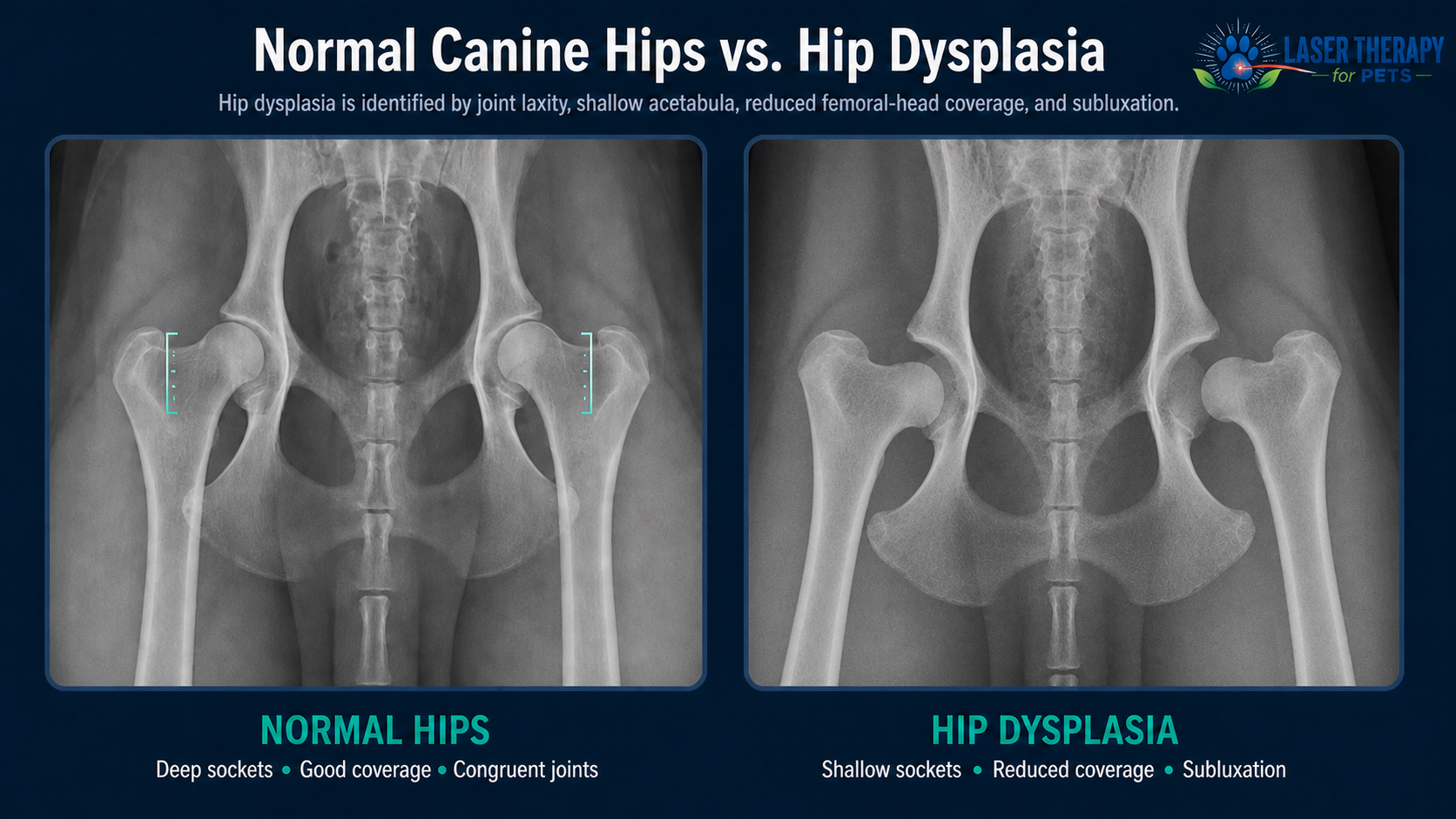
The pain is not coming from the shape of the bones alone. It may also come from an inflamed joint lining, a sore joint capsule, irritated nerves, muscle tension, and arthritic changes. Those are exactly the painful, inflammatory problems laser therapy is great at addressing.
Calming Pain Signals Helps Stop the Wind-Up Cycle
Consistent pain control matters because repeated pain signals can make the nervous system more sensitive. This is often called wind-up pain or central sensitization.
When this happens, the nervous system begins reacting too strongly. A movement or amount of pressure that once caused mild discomfort may start to feel much more painful. Dogs with naturally occurring osteoarthritis have shown signs of this widespread pain sensitivity in sensory testing. Canine osteoarthritis and central sensitization study
This helps explain why some dogs become increasingly guarded even when their X-rays have not changed very much. Pain is no longer limited to what is happening inside one joint.
Cold laser therapy relieves pain through several complementary effects. It calms irritated nerve activity, reduces inflammatory pressure around nerves, relaxes tight muscles, and supports the body’s own pain-relieving systems.
In a small human study of chronic trigger-point pain, certain laser doses were followed by changes in ACTH and beta-endorphin levels. Beta-endorphins are natural chemicals involved in pain relief. The response depended on the wavelength and dose used. Laser Therapy study
During treatment, I often see a dog take a deeper breath, soften his eyes, reposition his body, or stop bracing the painful area. Those changes tell me the nervous system is becoming more comfortable.
The 2022 AAHA Pain Management Guidelines also support proactive pain management instead of waiting until pain becomes severe. That approach is important with hip dysplasia because poorly controlled pain can lead to less movement, weaker muscles, more guarding, and greater pain sensitivity.
Reducing Inflammation Protects the Joint Environment
Hip dysplasia creates repeated irritation inside the joint. That irritation can inflame the synovium, which is the tissue lining the joint. The joint capsule, cartilage, nearby tendons, and surrounding muscles may also become involved.
Inflammation is not just harmless swelling sitting inside the hip. Persistent inflammatory chemicals can activate enzymes that break down the cartilage matrix. As cartilage becomes damaged, the joint becomes less protected and more inflammation develops.
This creates a cycle:
- Abnormal hip movement irritates the joint.
- The joint becomes inflamed and painful.
- Inflammatory activity contributes to cartilage breakdown.
- Cartilage loss increases joint stress.
- More inflammation and pain develop.
Laser therapy helps interrupt this cycle by calming the inflammatory response.
In a rabbit osteoarthritis study, low-level laser therapy reduced joint pain, synovial inflammation, and several inflammatory and cartilage-degrading markers. The researchers also found higher levels of substances associated with cartilage structure and protection. Rabbit osteoarthritis study
A rat osteoarthritis study found less cartilage degeneration and lower levels of IL-1 beta, caspase-3, and MMP-13 after low-level laser therapy. These are substances associated with inflammation, cell damage, and cartilage breakdown. Rat osteoarthritis study
These are laboratory animal studies give us promising evidence that photobiomodulation can influence the inflammatory processes involved in continuing cartilage damage.
My practical interpretation is this: reducing persistent inflammation reduces some of the ongoing inflammatory cascade that contributes to cartilage degradation.
Improving Circulation and Relieving the Tissues Around the Hip
Laser therapy also supports local microcirculation. Better circulation helps bring oxygen and nutrients into the treatment area and carry away fluid and waste products.
I rarely think of hip dysplasia as one painful dot over the side of the pelvis. A dog may also have:
- Tight gluteal muscles
- Sore upper-thigh muscles
- Tenderness around the joint capsule
- Lower-back tension
- Uneven weight distribution
- More guarding on one side, even when both hips are affected
These tissues work harder to stabilize or protect an abnormal hip. Using laser therapy at home allows us to support all of these additional tissues affected by hip dysplasia.
What Laser Therapy Changes, and Why It Matters
Setting expectations is an essential part of every laser therapy recommendation I make. I explain to pet parents exactly what laser therapy can change, what it cannot change, and what improvement should look like for their dog. We discuss realistic goals such as less pain, easier rising, smoother movement, and better tolerance for daily activity, while being clear that laser therapy will not correct the underlying anatomy of a malformed hip. This client education helps families use the treatment consistently, recognize meaningful progress, and make safe decisions as their dog begins to feel better.
| Laser therapy may influence | Laser therapy does not correct |
| Pain signaling | A shallow hip socket |
| Joint and soft-tissue inflammation | Permanent joint laxity |
| Swelling and stiffness | Abnormal bone alignment |
| Muscle guarding | Advanced cartilage loss |
| Comfortable movement | Severe mechanical instability |
| The local repair environment | Every need for medication or surgery |
Laser therapy treats the painful and inflammatory effects of hip dysplasia. It does not reshape the femoral head or acetabulum.
That does not make it “just comfort care.” Pain relief, better circulation, reduced swelling, and improved tissue function are meaningful biological changes. They help dogs stay active enough to preserve muscle strength and joint range of motion.
However, feeling better does not make an unstable hip structurally normal. A dog who becomes more comfortable should not immediately return to uncontrolled running, jumping, or rough play.
Which Dogs Benefit from Laser Therapy
Dogs with mild, moderate, or advanced hip dysplasia can benefit from laser therapy. The goals simply change as the disease becomes more severe.
A younger dog with early inflammation may need help controlling flares and protecting comfortable movement. A senior dog with advanced arthritis may need ongoing pain relief and support for the muscles surrounding the hips.
Signs that tell me laser therapy belongs in a dog’s treatment plan include:
- Stiffness after sleeping
- Difficulty rising
- A shortened back-leg stride
- Bunny-hopping when running
- Soreness after activity
- Reluctance to use stairs
- Reduced interest in walks
- Shifting weight toward the front legs
- Tight or tender hip and thigh muscles
I do not make this decision from X-rays alone. Radiographic arthritis changes do not always match a dog’s pain or function. Current canine osteoarthritis guidelines also recognize that imaging severity and daily clinical function may not line up neatly. COAST osteoarthritis consensus guidelines
I look at the whole dog. I consider how he rises, walks, rests, uses his back legs, responds to touch, and functions at home.
Advanced hip disease does not rule out laser therapy. It can still relieve pain, even when a severely damaged hip cannot return to normal movement.
I remind my clients that sudden severe lameness is different. A dog with known hip dysplasia can still tear a cruciate ligament, injure his back, develop a paw problem, or experience another condition. New or dramatic symptoms should not automatically be blamed on the hips.
How I Use Laser Therapy for Dog Hip Dysplasia
A good hip protocol needs more thought than pointing a laser at the widest part of the pelvis.
The exact placement, contact method, treatment distance, and session length must match the device being used.
Treat the Hip and the Tissues Compensating for It
I begin by gently feeling the hips, gluteal muscles, thighs, and lower back. I look for heat, swelling, muscle tightness, tenderness, and guarding.
Treatment may include:
- The region around the affected hip joint
- Both hips when the disease is bilateral
- Tight gluteal and upper-thigh muscles
- The lower back when compensation is creating soreness
- Relevant nerve pathways before direct local treatment
If a dog is very guarded, I may begin applying the light away from the most painful spot or work along the back before treating the hip. This can help the nervous system relax before light is applied directly over the sore area.
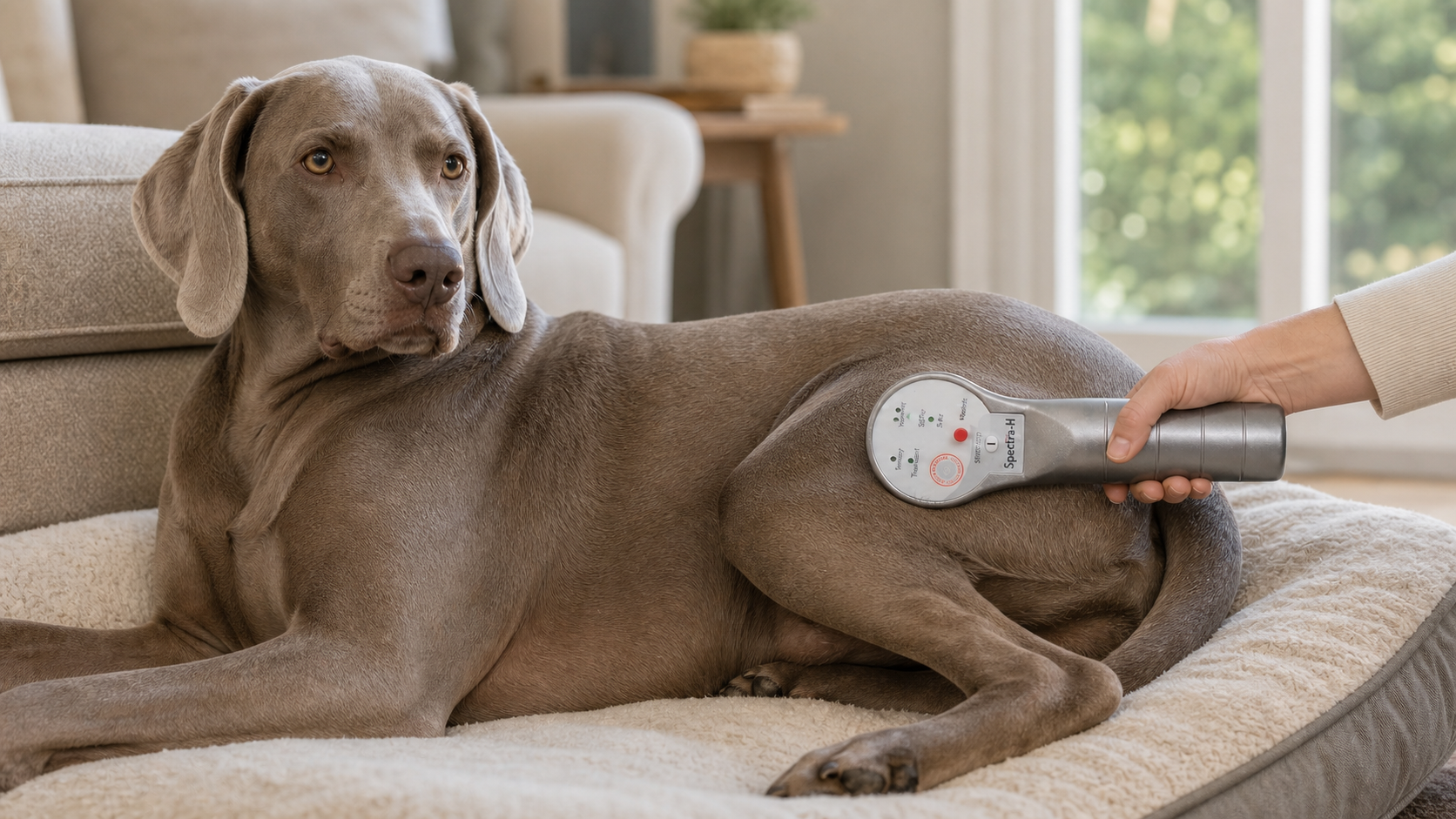
With the low-level-laser devices I use, I often begin with a brief pass along either side of the spine. I then treat the hip and the nearby muscles. This is based on my clinical experience and the operating factors for those specific devices. It is not a universal protocol for every laser.
Treat Daily During Painful Flare Ups
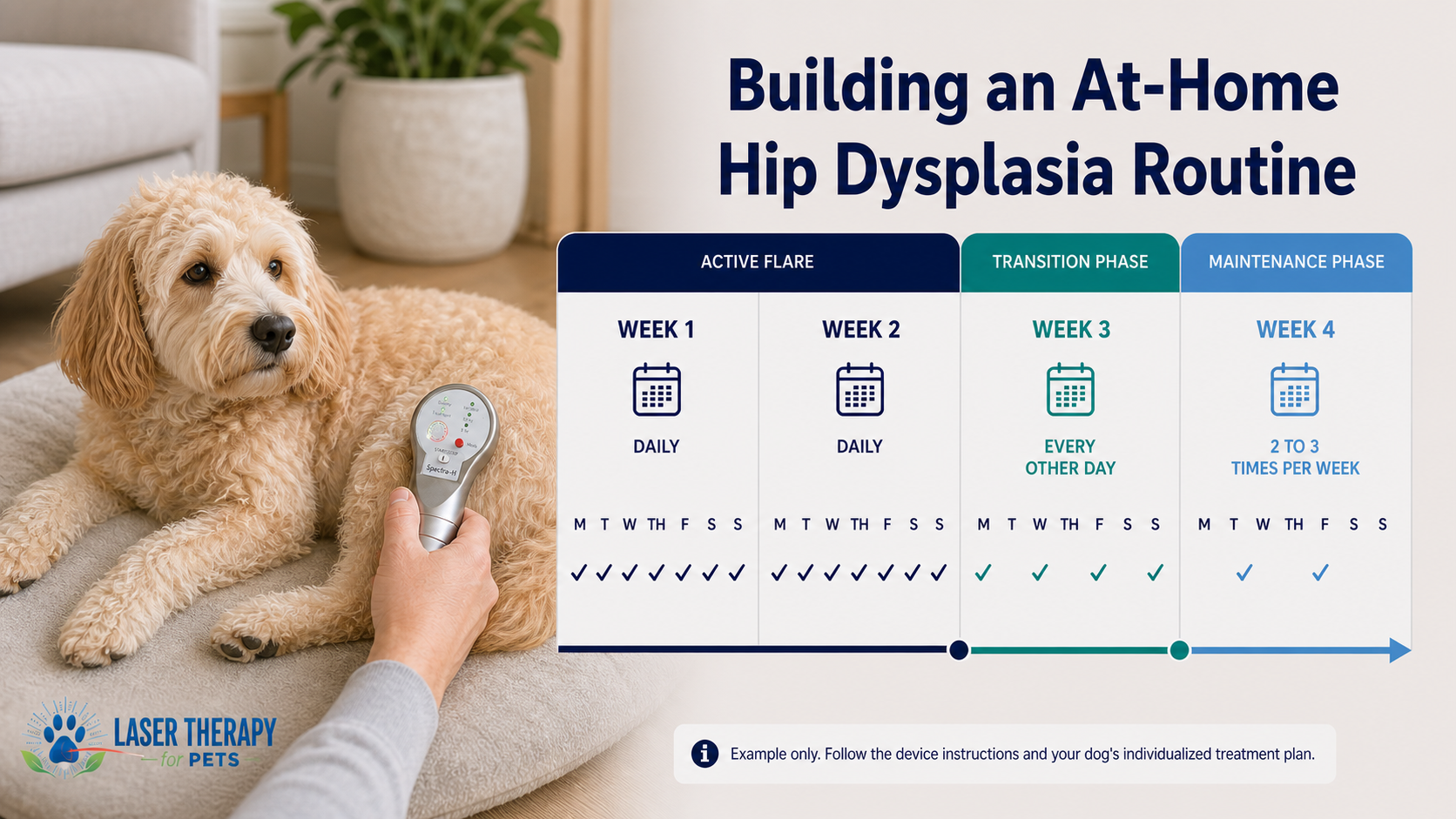
For most dogs with mild to moderate hip pain, I commonly begin with one at-home treatment per day during an active flare.
I have used many schedules during my 14-plus years working with laser therapy. I have provided single treatments and scheduled arthritis appointments twice a week. My results improved when I began renting devices to pet parents and teaching them to treat once daily at home.
The dogs often became more comfortable and improved faster. I could see the changes at weekly follow-ups, and families were noticing day-to-day differences at home.
Once a dog is moving better and the flare has settled, I may reduce treatment to every other day. Some dogs can later move to a few sessions per week for maintenance.
The duration of the actual laser administration depends on your dog’s size and the specific outputs of the laser therapy device. For hip dysplasia protocols, I do not recommend one universal number of minutes, however treatments with low powered lasers often range between 5 and 15 minutes.
Track Comfort and Function Instead of Relying on Memory
A simple laser therapy treatment log is one of the most useful tools a pet parent can keep.
Track the same signs each day:
- Date and treatment area
- Treatment cycle or session length
- Ease of rising
- Stiffness after rest
- Mobility later that day
- Mobility the next morning
- Heat, swelling, tenderness, or muscle tightness
- Medications given
- Activity level
- Possible flare triggers
Gently feel the area before treatment. Over time, you may notice less heat, less muscle tension, or less resistance to touch.
Watch for overactivity too. A dog may feel better before the joint becomes more stable. If he suddenly runs farther, plays hard, or repeatedly jumps after several comfortable days, the extra joint stress can trigger another flare.
Always follow the activity restrictions in your dog’s hip treatment protocol.
Why I Prefer At-Home Laser Therapy for Chronic Hip Pain
Both home and clinic devices are used to create a photobiomodulation response. The main differences are how the light is delivered, how often treatment can be repeated, and what the dog experiences around each session.
| Comparison | At-home Class I low-level laser | In-clinic Class IV laser |
| Therapeutic goal | Photobiomodulation | Photobiomodulation |
| Energy delivery | Lower and slower | Higher and faster |
| Laser application time | 5-15 minutes | 1.5-3 minutes |
| Treatment environment | Familiar home setting | Busy veterinary clinic |
| Repeatability | Often easier to use daily | Limited by appointments and travel |
| Heat concern | Should remain non-heating during correct use | Requires careful heat and technique management |
| Eye precautions | Class I is considered non-hazardous during normal operation; no eye goggles required for most devices | Strict protective controls are required. The technician and pet parent must wear laser protective glasses, and your dog must wear protective goggles during treatment |
I prefer a high-quality at-home low-level laser for most dogs with chronic hip pain. Because the hip joint lies beneath several layers of tissue, the device must use wavelengths that penetrate deeply enough to reach the treatment area. A shallow-penetrating device will not deliver an effective dose to tissues more than about 5 mm below the surface. Wavelength plays a major role in penetration depth, so I recommend a device with at least one wavelength above 700 nm and, for large-breed dogs, preferably above 800 nm. Red-light-only devices generally do not penetrate deeply enough to treat the hip joint effectively.
At-home treatment also makes daily care practical, consistent, and comfortable. Your dog can relax on a bed or another nonslip surface while you treat the hip, without the stress of travel or repeated clinic visits.
A one-minute clinic treatment is not really a one-minute experience. A painful large dog may need to be helped into the car, balance during the drive, walk across a slick floor, and tolerate handling in an unfamiliar place.
Class IV lasers can have a place in professional treatment. However, stronger does not automatically mean better. Laser class is determined by level of potential hazard, not therapeutic results. The FDA classifies Class IV lasers as immediate eye and skin hazards from direct or reflected exposure, with a possible fire hazard. FDA laser classification information
A properly designed home laser delivers light more gently and makes repeated treatment practical. The results still depend on the device, wavelengths, dose, treatment placement, and consistency.
When Not To Use Cold Laser Therapy
In dogs with hip dysplasia, low-level laser therapy is generally well tolerated when the correct device is used properly.
In my home-treatment protocols, I avoid or use special caution with the following:
- Direct exposure to the eyes
- Direct treatment over the thyroid gland
- Direct treatment over a known benign or malignant growth
- Previously removed masses or fatty lumps
- Pregnancy or lactation
- Growing puppies
- Areas with unexplained bleeding
Laser Therapy Belongs in a Complete Hip Dysplasia Plan
Laser therapy is a core part of a complete hip dysplasia plan. It reduces pain so the dog can move safely while the rest of the plan controls joint load and mechanical stress.Laser therapy works best when it reduces pain enough to support safe daily movement while the rest of the plan controls joint load and mechanical stress.
A complete plan may also include:
- Maintaining a lean body condition
- Controlled, appropriate activity
- Preserving hip and thigh muscle
- Non-slip flooring and better traction
- Ramps or steps where appropriate
- Pain medication when needed
- Joint-supportive nutrition and supplements
- Rehabilitation or hydrotherapy support
Conservative management of canine hip dysplasia commonly combines weight control, modified exercise, pain management, and other forms of physical support. Veterinary review of conservative hip dysplasia management
The balance matters. Complete inactivity can lead to muscle loss, but uncontrolled activity can increase joint irritation. Pain relief is helpful only when we use the dog’s improved comfort wisely.
I try to avoid the “feels better, overdoes it, flares again” cycle. Comfortable, controlled movement is the goal.
Get Dr. Candy’s Full Holistic Healing Program for Managing Hip Dysplasia
Dr. Candy is developing a practical, veterinarian-guided program to help pet parents build a complete at-home approach for comfort, mobility, and long-term support.
Dr. Candy’s Bottom Line: Laser Therapy Helps Dogs Move More Comfortably
Laser therapy cannot correct the abnormal anatomy of hip dysplasia. What it can do is help control many of the problems that make the condition painful.
By calming pain signals, we reduce the risk of the nervous system becoming increasingly sensitive. By reducing persistent inflammation, we lessen the inflammatory activity that contributes to continuing cartilage damage. By treating the hip and the surrounding tissues, we help a dog move with greater comfort.
Consistency is one of the biggest reasons I prefer at-home treatment when it is appropriate. We can treat a flare early, monitor the hip every day, and adjust the schedule according to the dog’s response.
If you are unsure where to treat, how often to use a laser, or which device is appropriate for your dog’s hips, I can help you build a practical at-home plan.
Frequently Asked Questions About Laser Therapy for Dog Hip Dysplasia
No. Laser therapy cannot reshape a shallow hip socket or malformed joint anatomy. It can help reduce pain, inflammation, stiffness, and other effects of hip dysplasia and secondary osteoarthritis.
Many dogs relax or move more comfortably during the first few treatments. The clearest, most durable mobility changes come with repeated, consistent sessions. The response depends on the severity of the hip disease, other sources of pain, treatment frequency, device parameters, and treatment placement.
I commonly recommend one session per day during an active painful or inflammatory period when using an appropriate home device. Treatment can often be reduced to every other day or several times per week after the dog improves.
Laser therapy may reduce inflammatory processes that contribute to continued cartilage degradation, but it has not been proven to prevent all cartilage loss in dogs with hip dysplasia. Direct cartilage-protection findings are promising but currently come mainly from laboratory animal osteoarthritis studies.
Yes. Appropriately administered low-level laser therapy is a safe, well-tolerated option for senior dogs. The diagnosis, treatment area, device instructions, eye safety, tumors, and individual health concerns still need to be considered.
References
- Willemsen K, et al. Comparing Hip Dysplasia in Dogs and Humans: A Review. Frontiers in Veterinary Science. 2021.
- de Oliveira Reusing MS, et al. Effects of Hydrotherapy and Low-Level Laser Therapy in Canine Hip Dysplasia: A Randomized, Prospective, Blinded Clinical Study. Revue Vétérinaire Clinique. 2021.
- Alves JC, et al. A Randomized Double-Blinded Controlled Trial on the Effects of Photobiomodulation Therapy in Dogs with Osteoarthritis. American Journal of Veterinary Research. 2022.
- Barale L, Monticelli P, Adami C. Effects of Low-Level Laser Therapy on Impaired Mobility in Dogs with Naturally Occurring Osteoarthritis. Veterinary Medicine and Science. 2023.
- Knazovicky D, et al. Widespread Somatosensory Sensitivity in Naturally Occurring Canine Osteoarthritis. The Veterinary Journal. 2016.
- Laakso EL, et al. Plasma ACTH and Beta-Endorphin Levels in Response to Low-Level Laser Therapy for Myofascial Trigger Points. Laser Therapy. 1994.
- Gruen ME, et al. 2022 AAHA Pain Management Guidelines for Dogs and Cats. Journal of the American Animal Hospital Association. 2022.
- Wang P, et al. Effects of Low-Level Laser Therapy on Joint Pain, Synovitis, Cartilage Degradation, and Inflammatory Markers in Rabbit Osteoarthritis. PLoS ONE. 2014.
- Assis L, et al. Aerobic Exercise Training and Low-Level Laser Therapy Modulate Inflammation and Cartilage Degeneration in Experimental Osteoarthritis. Osteoarthritis and Cartilage. 2016.
- Hegedűs B, et al. The Effect of Low-Level Laser in Knee Osteoarthritis. Photomedicine and Laser Surgery. 2009.
- Cachon T, et al. COAST Development Group’s International Consensus Guidelines for the Treatment of Canine Osteoarthritis. Frontiers in Veterinary Science. 2023.
- Millis DL, Bergh A. A Systematic Literature Review of Complementary and Alternative Veterinary Medicine: Laser Therapy. Animals. 2023.
- Harper TAM. Conservative Management of Hip Dysplasia. Veterinary Clinics of North America: Small Animal Practice. 2017.
- U.S. Food and Drug Administration. Laser Products and Instruments: Laser Hazard Classes.